
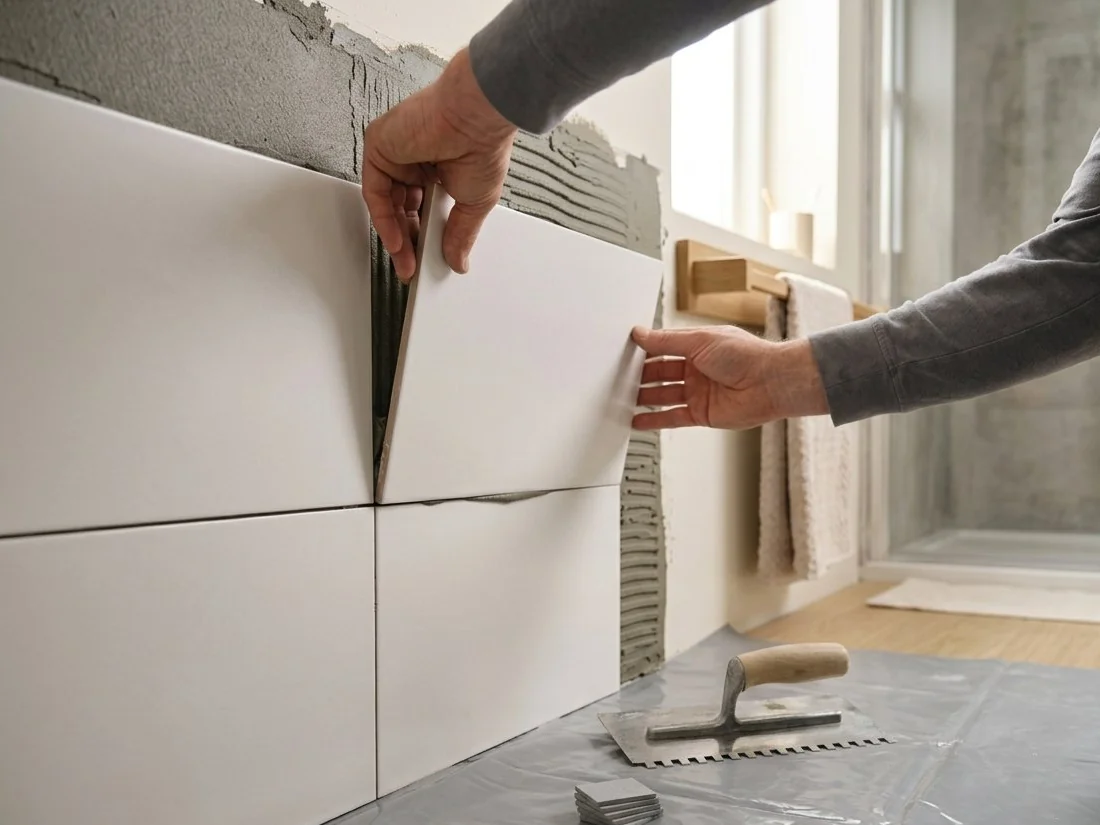
Why are tiles so popular in bathrooms?
Tile is the standard for bathrooms for good reason. It's waterproof, durable, easy to clean, and works in virtually any style — from classic to industrial. Tile resists moisture, mold, and daily wear better than most wall and floor finishes. With proper installation, a tile bathroom easily lasts 20 to 30 years.
What types of bathroom tiles are there?
Not all tiles are the same. Material affects durability, price, and look. The main categories:
Ceramic tiles
Ceramic tiles are the most common choice for bathrooms. They're produced from clay at high temperatures and offered in many colors, sizes, and finishes. They're affordable, easy to process, and well suited to bathroom walls. For bathroom floors, pick a version with a proper hardness rating.
Porcelain tiles
Porcelain tiles are a denser, harder version of ceramic, fired at higher temperatures. They absorb less water, are harder, and more suitable for heavily used floors. Porcelain tiles often cost more but pay off in durability — especially for floors and wet areas.
Natural stone
Marble, travertine, slate, and other natural stones add a luxurious look. They are unique — no two tiles are identical. Note: natural stone is porous and requires proper sealing and ongoing maintenance to stay beautiful and waterproof in a bathroom.
Glass tiles
Glass tiles work beautifully as accents — in a shower niche, as a border, or on a feature wall. They reflect light and bring shine to smaller bathrooms. Glass is generally not ideal for floors in larger surfaces, but as an accent it adds real character.
Size and layout: small or large tiles?
Tile size affects both the look and the feel of a bathroom. Both large and small tiles have their place.
Large tiles (60x60, 80x80, and larger)
Large tiles visually enlarge a space and create fewer grout lines — modern and clean. They're popular on floors and walls in larger bathrooms. Installation does demand a flat, well-prepared substrate; small irregularities show up easily with large formats.
Small tiles and mosaic
Smaller tiles and mosaic work well in showers, on curved surfaces, and as accents. Many small grout lines give extra grip on shower floors — valuable for slip resistance. Mosaic is also ideal for shower niches, windowsills, and decorative bands.
Tips for small and large bathrooms
In smaller bathrooms, medium to large tiles often work better than very small ones — fewer grout lines make the space feel calmer and larger. In bigger bathrooms, you have more freedom: combine large formats on walls with smaller tiles in a shower area for contrast and function.
Floor considerations
Bathroom floor tiles have specific requirements that go beyond aesthetics.
Slip-resistance class (R9, R10, R11)
For bathroom floors, slip resistance matters. The R-rating indicates how much grip a tile provides:
- R9: limited grip — usually not suitable for wet bathroom floors.
- R10: standard slip resistance — suitable for most bathroom floors outside the shower.
- R11 or higher: extra slip resistance — recommended for the shower zone and walk-in showers.
Waterproofing and grout
A bathroom floor must be fully waterproof. Your tile setter installs a waterproofing system under the tiles — essential at the shower drain and wall connections. Grout width depends on tile format; larger tiles use wider grout lines. The slope toward the drain must be correct so water runs off properly.
Combining with underfloor heating
Tile floors pair excellently with underfloor heating. Tile conducts heat well, making for even warmth throughout the bathroom. Electric underfloor heating under tile is especially popular in bathrooms — quick warm-up and low height buildup. For new-construction and renovation, a water-based system works well too.
Having tiling or a bathroom done?
AZ Grand Solutions installs tile in bathrooms, kitchens, and other rooms in the Utrecht region. Professional installation, watertight sealing, and a clean finish.
Request a quote More about tilingWall considerations
Tile height on walls
A common question: floor to ceiling or only up to shower head height? Fully tiled walls give a luxurious, cohesive look and protect maximum surface area from moisture — but cost more. Tiling up to about 2.1–2.3 meters and finishing the rest with paint is a great compromise: the wet zones are covered, costs stay down, and the bathroom looks modern and calm.
Accent walls and patterns
An accent wall — behind the tub, sink, or in the shower — breaks up the space and makes the bathroom unique. Consider:
- Contrasting colors or patterns
- Herringbone layout
- Mosaic or natural stone as an accent
- Vertical or horizontal tile orientation
Coordinating with plumbing
Tile choice goes hand in hand with fixture choice. Coordinate the color of your sink, faucets, shower, and toilet with your tile palette. Many people now choose black or brushed brass hardware — these show best against light tiles in warm tones.
Color and style: trends and timeless choices
Timeless colors
Off-white, light gray, soft beige, and natural stone tones work in any style and stay beautiful for years. These colors make a bathroom feel calm and spacious, and they rarely look dated. A safe choice if you plan to keep the bathroom for 10+ years.
Trend colors and patterns
For 2026, trends include terracotta, sage green, deep navy, and warm earth tones. Natural-stone looks (marble, travertine) stay popular, and matte finishes are winning ground from high-gloss. Structure and texture — ribbed, fluted — add depth to walls.
Grout: color and finish
Light versus dark grout
Grout color has a big impact on the final look. Light grout with light tiles gives a clean, spacious feel but shows dirt faster. Dark grout with light tiles emphasizes the tile pattern and requires less cleaning, but gives a busier look. Matching grout with the tile color makes surfaces appear seamless — ideal for a calm, uniform look.
Epoxy grout
Epoxy grout is extra durable, waterproof, and stain-resistant. It costs more than standard grout and is harder to install, but it pays off in wet areas and showers where normal grout eventually discolors. For a shower niche or shower floor, epoxy grout is worth considering.
Grout maintenance
Keep grout looking good by wiping it down regularly with a soft brush and mild cleaner. Avoid aggressive acids that damage standard grout. Good ventilation in the bathroom prevents mold between grout lines.
Maintenance and lifespan
Tile is among the lowest-maintenance bathroom finishes. Daily cleaning with water and a mild neutral cleaner is usually enough. Avoid aggressive chemicals with natural stone — they can damage the stone.
With good installation, quality materials, and normal use, a tile bathroom easily lasts 20 to 30 years. Grout may need renewal earlier (after 8–12 years), and silicone seams between tile and tub/shower every 3–5 years. These are relatively inexpensive maintenance tasks that keep your bathroom fresh.
Tips for talking to your tile setter
Good communication with your tile setter prevents surprises. Go over:
- Substrate condition: is leveling needed? Is waterproofing required?
- Layout pattern: straight, brick-bond (staggered), herringbone, or special?
- Cuts and waste: more complex patterns mean more waste — plan for about 10% extra tile.
- Order of work: floor first, then walls, or the other way around? Depends on the situation.
- Slope and drainage: correct slope toward the drain in the shower area.
- Underfloor heating: confirm it's compatible with your tile choice and substrate buildup.
- Grout and silicone choice: match to how the bathroom will be used.
- Finishing around fixtures: how are the toilet, sink, and shower detailed?
Clear agreements and a detailed quote prevent misunderstandings. A good tile setter advises on substrate, material, and execution — and confirms everything in writing.


