
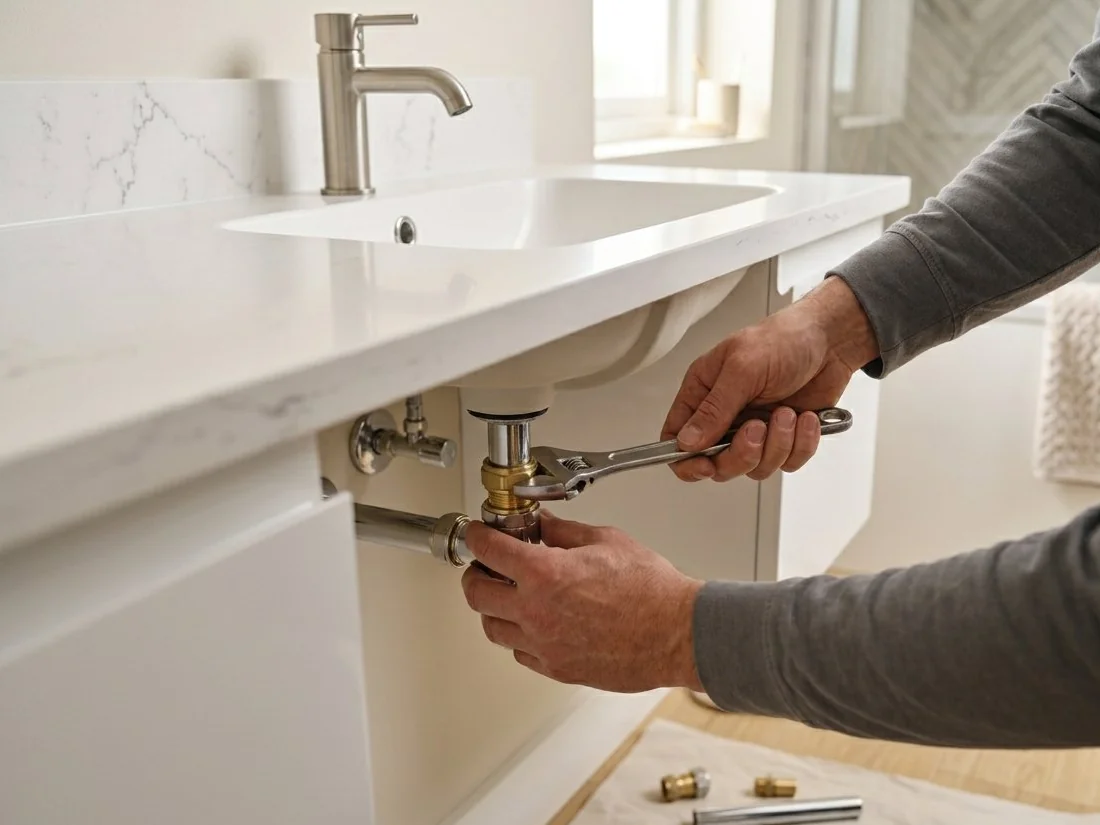
This guide gives you a clear, fast action plan: follow these 5 steps in the first 10 minutes after discovering a leak. You'll limit water damage and set up a technician for a quick fix.
Step 1: Shut off the main water valve (about 1 minute)
With an active leak in a pipe or appliance, the first and most important step is to stop the water. Without new supply, the leak can't keep going.
Find the main water valve:
- usually in the utility cabinet (meterkast);
- in a small basement;
- in the utility room or under the stairs.
Turn the valve all the way off (usually clockwise, to the right). Don't know where the main valve is? Go find it now — not when the floor is already flooded.
If you really can't find it and water keeps gushing, call an emergency service or plumber straight away for help shutting off the supply.
Step 2: Switch off electrical where needed (about 2 minutes)
As soon as water reaches outlets, power strips, lighting, or electrical appliances, safety takes priority. A leak always calls for a quick electrical check.
Is water near outlets or appliances?
- Go to the utility cabinet.
- Switch off the circuit(s) serving the wet area.
- Switch off the main breaker only if you're not sure which circuit is involved or the situation isn't clear.
Never touch wet plugs, outlets, or appliances. Stay clear if there's any risk of a short. Stop the water first, make it safe, then worry about damage.
Step 3: Limit water damage (about 3 minutes)
With the water supply stopped, focus on protecting belongings and the interior.
- Lay down towels, mops, or old sheets where water is dripping or flowing.
- Place buckets or bowls under leak points in a ceiling or pipe.
- Move furniture, rugs, and items out of the wet zone. Pay special attention to wooden furniture, cabinets, electronics, and papers.
- Can't move heavy furniture? Put plastic bags or trash bags under the legs to reduce direct contact with water.
- Where possible, remove water right away with a mop or wet vacuum — especially on wood or laminate floors.
- Take photos of the leak and visible damage (floor, walls, furniture). This helps with your insurance later.
Important: don't keep mopping while water is still pouring. Stop the source first, then clean up.
Step 4: Locate the source (about 2 minutes)
Once the situation is under control, it helps to look briefly at where the water seems to come from. This makes it much easier for the technician to act fast.
Check:
- Is the water coming from a pipe (cold or hot water line, heating pipe)?
- Does it seem to come from a drain (sink, shower, toilet, washing-machine drain)?
- Do you see damp spots or drips around the roof, dormer, or window frames (possible roof leak)?
- Is it dripping at the heating system, boiler, washing machine, or dishwasher?
Tips:
- Listen for dripping or trickling.
- See if the leak gets worse when you open a faucet or an appliance runs.
- Carefully (with a dry hand) feel whether a wall or ceiling is especially wet or cold in one spot.
Don't start cutting into walls or ceilings. The goal is just to get a rough sense of the source for the technician's action plan.
Step 5: Call the right help (about 2 minutes)
Once you've limited the initial damage, it's time to bring in help. An active leak almost always calls for a professional.
- For pipe leaks, leaking faucets, toilet, or drain: call a plumber or emergency service with experience in leaks and piping.
- For leaks around the roof or a roof window: call a roofer or leak specialist.
- Insurance: report the leak to your homeowner's or contents insurance as soon as possible. They often ask for photos and information about the cause.
- Rental home: contact your landlord or housing association alongside bringing in a professional.
Call for help to stop or fix the source first, and your insurance second. Insurers expect you to limit damage — not stand by while the leak continues.
Active leak in the Utrecht region?
AZ Grand Solutions is available 24/7 for emergencies — water leaks, heating faults, electrical issues, and drain unblocking. Call now and we'll come out as quickly as possible.
📞 Call +31 6 13636925 More about emergency serviceWhat NOT to do
With a leak, there are things you're better off avoiding:
- Can't find the main valve and running around while the water keeps flowing. Can't locate it quickly? Call a plumber or emergency service right away for guidance or help.
- Only mopping water without stopping the source or supply. The leak keeps going — often behind walls or under floors.
- Opening pipes or loosening fittings yourself without the right knowledge. You can make the leak worse or cause new damage.
- Waiting for it to stop on its own. An active leak almost never resolves itself and often causes hidden damage if you wait.
When is it a real emergency?
Not every drop is a disaster, but some situations call for true emergency treatment:
- A lot of water that doesn't stop, even after closing room faucets.
- Water reaching electrical installations (outlets, power strips, lighting).
- A ceiling bulging or sagging because water is pooling above it — there's risk of collapse and structural damage.
- You live in an apartment or upper-floor unit and water is leaking down to neighbors below.
In these cases, bring in emergency service as quickly as possible — especially if further damage to the home, neighbors, or electrical is imminent.
How to prevent leaks in the future
You can't prevent every leak, but you can significantly reduce the risk:
- Have pipes, fittings, and faucets visually checked regularly, especially in older homes.
- Replace washing-machine and dishwasher hoses on time; leaving the same hoses for years increases the chance of cracks.
- Check connections and traps under sinks and washing machines for drips or corrosion.
- Watch caulk and grout lines in showers and bathrooms; damaged or moldy edges are often the start of leaks down below.
- During remodels or renovations, have a professional look at the condition of pipes and drains, so weak spots get addressed up front.
Regular maintenance and timely replacement of older parts is usually cheaper than repairing major water damage.
Wrap-up
In short: for an active leak, the most important actions in the first 10 minutes are to shut off the main valve, make the situation electrically safe, limit water damage, and then bring in a professional. Take photos for insurance and try to locate the source without tearing anything apart yourself.
If you live in the Utrecht region and notice a serious leak, don't wait: a dedicated emergency service can help get the situation under control fast and prevent further damage. And once the immediate situation is handled, think about prevention and regular checks — better to avoid the problem than to fix it.

